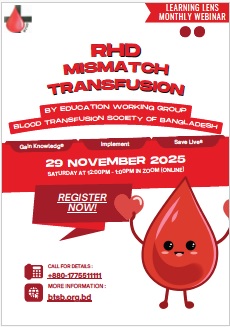
Dr. Samia Hoque presented on RhD Mismatch Transfusion, discussing its causes, risks and clinical management strategies to prevent RhD alloimmunization. She explained the Rhesus blood group system, focusing on the RhD antigen's clinical significance and the various D variants that can lead to mismatched transfusions. Dr. Hoque outlined diagnostic approaches and provided a decision-making flowchart for managing RhD-positive blood in RhD-negative individuals, including the use of Rh immunoglobulin prophylaxis and red cell exchange when necessary.
Dr. Mohammed Mejbahuddin Mia presented on laboratory diagnosis and clinical case-based scenarios for RhD mismatch transfusion, discussing the use of direct anti-globulin test (DAT), antibody screening and biochemical markers. He outlined the criteria for Rh immunoglobulin therapy, emphasizing the importance of preventing alloimmunization in RhD-negative individuals, particularly women of childbearing age. The presentation included three case studies demonstrating the effectiveness of prompt high-dose intravenous anti-D immunoglobulin in mitigating the risk of RhG sensitization, even in non-obstetric surgical emergencies and pediatric patients. There were two cases involving red cell exchange following with RhIg for neutralizing residual RhD-positive RBCs.
The meeting focused on a discussion about RhD prophylaxis, including its practical applications in Bangladesh and the role of the Blood Transfusion Society of Bangladesh in preparation of the protocol. Dr. Farhana Islam, the President of the Society, emphasized the importance of practical and clinical aspects in RhD mismatch transfusion with shortage of RhIg nationwide. The participants discussed the need for theoretical and practical knowledge in this field, as well as the importance of national protocol related to use of RhIg. The conversation ended with a request for group photos and plans for future activities.
Blood Transfusion Society of Bangladesh
Leading the way in safe and advanced transfusion practices